
Introduction to Islamic Microfinance Banking in Nigeria
Islamic Microfinance Bank in Nigeria plays a vital role in providing Shariah-compliant financial services to underserved communities, especially those excluded from conventional banking. By following the principles of interest-free banking, these institutions promote ethical lending and ensure that transactions avoid riba (usury).In Nigeria, where many small entrepreneurs and low-income families face financial barriers, Islamic microfinance banks empower them through halal investment opportunities and profit-sharing models.
This system not only supports economic growth but also fosters financial inclusion aligned with Islamic values. With a growing Muslim population in Nigeria, the demand for such banking solutions continues to rise, offering a pathway to sustainable and faith-based development.
What is an Islamic Microfinance Bank and how does it Work?
An Islamic Microfinance Bank in Nigeria is a financial institution that follows Shariah law. Instead of charging interest, these banks use profit-sharing or lease-to-own systems. This keeps banking fair and in line with Islamic ethics. The loan application process Nigeria in these banks is often simpler than in traditional banks.
For example, when a business owner requests funding, the bank may buy the needed equipment and let the owner pay in installments. This way, the bank earns profit through trade, not interest. Services also include digital Islamic banking, which lets customers use bank apps for Nigerians for easy access.
Key Principles of Islamic Microfinance in Nigeria
The main principles are simple yet powerful. First, Shariah-compliant banks Nigeria avoid all forms of interest, known as Riba. Second, they share both risks and profits with clients. Third, they only invest in ethical and legal activities. This ensures money is used for good purposes.
Nigerian microfinance institutions also stress fairness in contracts and transparency in dealings. All transactions must be clear, and both sides must agree to the terms. This builds trust, especially among people who are new to banking.
Difference between Islamic and Conventional Microfinance
Interest-free banking Nigeria differs from conventional microfinance because it replaces fixed interest with partnership models. In a conventional loan, you pay a fixed percentage regardless of profit or loss. In Islamic banking, the bank shares in both gains and risks.
Another difference is how money is used. Shariah-compliant banks Nigeria cannot fund businesses that go against Islamic principles. For example, they cannot invest in alcohol or gambling. This makes them more socially responsible compared to many conventional banks.
Benefits of Islamic Microfinance for Nigerians
The benefits are clear. Many Nigerians get business funding Nigeria without worrying about interest. This supports small traders, farmers, and entrepreneurs. Women especially benefit, as they can start home-based businesses with small loans.
Another big advantage is trust. People know that Nigerian microfinance institutions follow Islamic ethics. By using mobile banking Nigeria, customers also save time and avoid long queues, making banking more convenient.
Major Islamic Microfinance Banks and Their Services in Nigeria
Some leading names include Jaiz Bank, TAJBank, Nirsal Microfinance Bank, Accion Microfinance Bank, Blue Ridge Microfinance Bank, and VFD Microfinance Bank. Each offers different services for savings, loans, and mobile transactions.
| Bank Name | Popular Service | Digital Option |
| Jaiz Bank | Jaiz Bank PLC account opening, How to apply for a Jaiz Bank loan | Jaiz Bank mobile app download |
| TAJBank | Taj Bank loan application, TajBank corporate banking services | Mobile app |
| Nirsal MFB | Nirsal MFB loan application online, How to get Nirsal loan approval | USSD & App |
| Accion Bank | Accion Microfinance Bank loan application form, Accion Bank loan requirements in Nigeria | App |
| VFD Bank | VFD Microfinance Bank online banking, VFD Bank app download | App |
| Blue Ridge | Blue Ridge Microfinance Bank customer care | Mobile support |

How to Apply for Islamic Microfinance Loans or Open an Account
To start, you must meet Nigeria bank account opening requirements. This often includes valid ID, proof of address, and a recent photo. Banks like Jaiz and TAJ also require small deposits. The loan application process Nigeria usually takes a few days to review.
For convenience, you can apply online. Many banks offer mobile banking Nigeria apps, such as MTN mobile app for banking and V Banking features in Nigeria, to open accounts and request loans without visiting a branch.
Challenges and Solutions for Islamic Microfinance in Nigeria
There are challenges like low public awareness, limited funding, and competition from larger banks. Some rural areas still lack access to Nigerian fintech banking services. These gaps slow down the growth of Islamic banking in Nigeria.
Solutions include using technology for digital Islamic banking, running awareness campaigns, and updating Central Bank of Nigeria regulations to support Shariah-compliant finance. Partnerships with mobile networks and fintechs can also reach more customers.
Impact of Islamic Microfinance on Poverty Reduction and Empowerment
Islamic microfinance has lifted thousands out of poverty in Nigeria. Women’s groups have used interest-free banking Nigeria to start small trade businesses. Young people have opened farms, shops, and service companies thanks to business funding Nigeria.
Case studies show that communities with active microfinance banks in Nigeria experience higher employment rates. These banks also strengthen social ties, as profit-sharing promotes fairness and mutual respect.
Future of Islamic Microfinance Banking in Nigeria
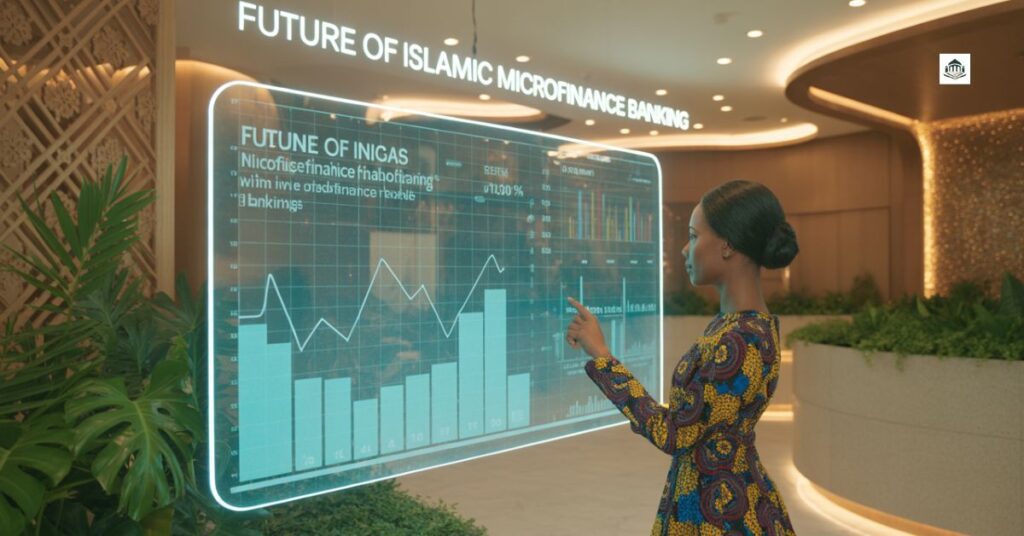
The future looks bright. Nigerian fintech banking is growing fast, and more people are turning to ethical finance. Digital Islamic banking services will make access even easier, especially in rural areas.
By 2030, Shariah-compliant banks Nigeria are expected to double their market share. With more corporate banking services Nigeria and technology-driven solutions, Islamic microfinance will remain a key player in achieving full financial inclusion in Nigeria.
Conclusion: the Role of Islamic Microfinance in Nigeria’s Financial Future
Islamic banking in Nigeria is more than just a banking model; it is a path to fair, inclusive, and ethical finance. By focusing on interest-free banking Nigeria and ethical investments, it supports people who were once left out of the formal banking system. The rise of Shariah-compliant banks Nigeria has given hope to small businesses, farmers, and women entrepreneurs who can now grow without falling into debt traps.
Looking ahead, the combination of digital Islamic banking, strong Central Bank of Nigeria regulations and new innovations from Nigerian fintech banking will help Islamic microfinance reach more Nigerians. If these banks continue to focus on transparency, fairness, and community empowerment, they will not only shape the country’s financial system but also contribute to lasting poverty reduction and economic growth.
FAQs
List of Islamic Microfinance Bank in Nigeria
Includes Jaiz Bank, Taj Bank, Lotus Bank, and others offer Shariah-compliant services.
Top 10 Islamic Microfinance Bank in Nigeria
Jaiz Bank, Taj Bank, Lotus Bank, Sterling Alternative Finance, Keystone Islamic Banking, etc.
Islamic Microfinance Bank in Nigeria PDF
Downloadable reports are available from the Central Bank of Nigeria and bank websites.
Islamic Microfinance Bank in Nigeria 2025
The sector expanded with more digital banking solutions and increased financial inclusion.
How Many Islamic Microfinance Bank in Nigeria
Over 5 fully licensed Islamic microfinance institutions operate nationwide.