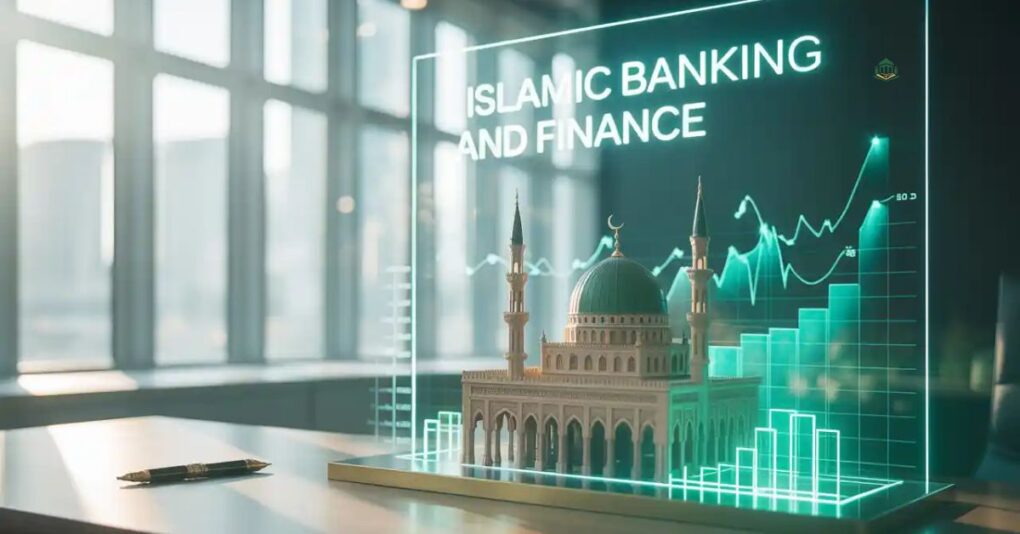
In 2026, Islamic Banking and Finance in Nigeria stands as a major transformation, moving the nation toward an interest-free, asset-backed economic model. This system operates on the core values of justice and transparency, providing a robust alternative to conventional banking for millions of citizens. These institutions follow Shariah rules. That means money is invested ethically. It supports real businesses instead of speculation.
As the Central Bank of Nigeria continues to refine non-interest banking regulations, the sector has seen a surge in halal investment opportunities, such as Sukuk bonds. If you want a deeper breakdown of how these bonds work and how Nigerians can invest in them, read our complete guide on Sukuk in Nigeria. Ultimately, this financial evolution promotes financial inclusion, bridging the gap for the unbanked population while driving sustainable development across West Africa.
What Is Islamic Banking? (The 2026 Perspective)
Islamic Banking is not exclusive to Muslims; it is a Universal Ethical Banking Model built on justice, equity, and transparency. In 2026, it is widely recognized as “Alternative Finance” or “Participation Banking” because its primary goal isn’t just profit—it’s societal welfare, environmental sustainability, and economic stability.
The Core Philosophy
In conventional banks, money is treated as a commodity to be sold for interest. In Islamic banking, money is merely a “medium of exchange.” The bank becomes your partner in a venture rather than a simple lender. This shifts the focus from “how much interest can I extract?” to “how successful can we make this project together?”
The Golden Rules: Key Principles of Islamic Finance
In the digital era of 2026, the success of Islamic Banking and Finance in Nigeria stands on five unbreakable pillars that ensure financial health for the individual and the community.
| Principle | 2026 Context | Benefit to You |
| No Riba (Interest) | Absolute prohibition of taking or giving interest. | You escape the “debt trap” cycle. |
| No Gharar (Uncertainty) | Contracts must be free from excessive ambiguity or uncertainty. | Total transparency in every deal. |
| Risk Sharing | Both bank and customer share profits and potential losses. | The bank is genuinely invested in your success. |
| Halal Investment | Funds are only used for Shariah-compliant businesses. | Your money never funds alcohol, gambling, or tobacco. |
| Asset-Backed | Every transaction must be tied to a tangible asset. | Reduces inflation and promotes real economic growth. |
The Surge of Islamic Banking and Finance in Nigeria (2026 Market Trends)
The Central Bank of Nigeria (CBN) implemented landmark policies between 2024 and 2025 that accelerated the growth of Non-Interest Financial Institutions (NIFIs). As of 2026, the sector has seen a 35% year-on-year growth.
Why Is It Booming?
- Financial Inclusion: Millions in rural areas who previously avoided banks due to religious reasons are now part of the formal economy.
- Infrastructure Sukuk: The Nigerian government has successfully used Sukuk bonds to fund massive road and bridge projects across the six geopolitical zones.
- The Youth Wave: Nigeria’s large Gen-Z and Millennial population are demanding tech-savvy, transparent, and ethical financial products.
Resilience to Inflation: Because Islamic finance is asset-backed, it has proven more resilient against the currency fluctuations that hit the naira in previous years.
Understanding Profit and Loss Sharing (PLS)
In a conventional bank, you deposit money and get a fixed return (eg, 10% interest) regardless of the bank’s performance. In Islamic Banking and Finance in Nigeria, the Mudarabah and Musharakah models ensure fairness.
Mudarabah (Profit-Sharing Partnership)
You act as the “Rab-ul-Maal” (Investor) and the bank acts as the “Mudarib” (Manager).
- Profit: Shared according to a pre-agreed ratio (eg, 60% for you, 40% for the bank).
- Loss: If the business fails (without negligence by the bank), the investor bears the financial loss, while the bank loses its time and effort. This encourages the bank to perform high-level due diligence.
Musharakah (Joint Venture)
In this model, both the bank and the customer provide capital. It is frequently used for house financing, where the customer gradually buys out the bank’s share of the property.
For a full comparison of services, branch networks, and account types, see our updated List of Islamic Banks in Nigeria (2025 Full Guide).
Major Islamic Banks in Nigeria (2026 Leaders)
The banking landscape has shifted significantly. Here are the titans of 2026 that are leading the charge in Islamic Banking and Finance in Nigeria:
- Jaiz Bank PLC: The pioneer. In 2026, they launched an AI-driven app that automates Zakat calculations and provides instant Murabaha financing for SMEs.
- TAJ Bank: Focused on digital-first retail banking. Their “Non-Interest Credit Cards” are currently a top choice for Nigerian professionals seeking interest-free liquidity.
- Lotus Bank: The leader in “Green Finance.” They specialize in funding renewable energy and sustainable agriculture, aligning Shariah principles with global ESG goals.
- The Alternative Bank (by Sterling): This standalone digital bank provides micro-loans to small traders without any interest charges, focusing heavily on financial empowerment for women.
Popular Islamic Financial Products
To truly understand Islamic Banking and Finance in Nigeria, one must be familiar with the products that drive the economy:
- Murabaha (Cost-Plus Sale): Instead of lending you money to buy a car, the bank buys the car and sells it to you at a markup. You pay in installments.
- Ijara (Leasing): This is the Shariah-compliant version of a lease. The bank owns an asset (like a tractor) and rents it to a farmer.
- Sukuk (Islamic Bonds): These are certificates representing ownership in a project (like a highway or airport). You earn “rent” or a share of the project’s revenue.
- Takaful (Islamic Insurance): Based on the principle of mutual assistance (Tabarru). If one member suffers a loss, the pool of funds contributed by all members is used to compensate them.
Exclusive: Top-Performing Halal Mutual Funds in Nigeria (2026)
If you are looking to grow your wealth ethically, these funds have shown exceptional performance in the current market:
| Fund Name | Fund Manager | Focus Area | 2025/26 Performance (Est.) |
| Lotus Halal Investment Fund | Lotus Capital | Equities & Asset Backed | ~28% – 32% (YTD) |
| Stanbic IBTC Shari’ah Fixed Income | Stanbic IBTC | Sukuk & Fixed Term | ~15% – 17% Yield |
| United Capital Sukuk Fund | United Capital | Sovereign & Corporate Sukuk | ~16.5% Yield |
| ARM Ethical Fund | ARM Investment | Shariah Stocks & Real Estate | ~21.7% Yield |
| Afrinvest Halal Fund | Afrinvest | Diversified Shariah Assets | ~14.2% Yield |
Pro Tip: For beginners, the Stanbic IBTC Shari’ah Fund is highly accessible with a minimum investment of just ₦5,000, while the Lotus Halal Fund is excellent for long-term capital growth through the Nigerian Stock Exchange (NGX) Shariah Index.
Halal Fintech: The New Frontier in 2026
The most exciting update for Islamic Banking and Finance in Nigeria in 2026 is the rise of Halal Fintech . Traditional barriers to entry have been dismantled by mobile technology.
- Shariah Robo-Advisors: Automated portfolios like those offered by Wahed Invest and local Nigerian startups now allow Nigerians to invest in global Shariah-compliant stocks (like Apple or Tesla) with a single click.
- Digital Sukuk Trading: You no longer need millions to buy into a Sukuk. Fintech apps allow you to buy “fragments” of government bonds for as little as ₦1,000.
- Blockchain and Smart Sukuk: In 2026, Nigeria began testing “Smart Sukuk” on the blockchain, ensuring that the revenue from toll roads or power plants is distributed to investors instantly and transparently without manual intervention.
Challenges and the Path Forward
Despite the meteoric growth of Islamic Banking and Finance in Nigeria, three major hurdles remain:
- The Awareness Gap: Many Nigerians still believe this is “Muslim-only” banking. Data shows that in 2026, over 40% of non-interest bank customers in Lagos and Port Harcourt are non-Muslims attracted by the ethical, “no-hidden-fees” transparency.
- Double Taxation: While the government has made strides, regulatory bodies are still perfecting the tax code to ensure that the transfer of assets in a Murabaha or Ijara contract isn’t taxed twice compared to a simple interest-based loan.
- Human Capital: There is a massive demand for financial analysts who are also experts in Shariah law. Universities are now rushing to offer specialized degrees in Islamic Finance.
Is Islamic Finance the Future of Nigeria?
If current trends continue, there’s little doubt Nigeria could become Africa’s Islamic finance powerhouse. By 2030, Nigeria is projected to become the “Islamic Finance Hub” of Africa, rivaling South Africa and Egypt. The integration of ethical principles with 2026’s digital infrastructure makes the system more stable than conventional models during periods of global economic volatility.
Conclusion: Your Journey to Ethical Prosperity
Islamic Banking and Finance in Nigeria in 2026 is more than just a way to store money; it’s a movement toward a fairer, asset-backed society. Whether you’re a small business owner looking for an interest-free loan, a corporate investor seeking high-yield Sukuk, or a student starting your savings journey, the Halal ecosystem offers a path that aligns your finances with your values.
Ready to grow the Halal way? Explore the digital apps of Jaiz, TAJ, or Lotus Bank today, or consult a Shariah-compliant advisor to start your journey into Sukuk and Halal Mutual Funds. The future of finance is ethical, transparent, and inclusive. From our research at GrowIslamic, we’ve noticed a sharp increase in search interest for halal investment apps in Lagos and Kano between 2024 and 2026.
FAQs
Can I use Islamic Banking if I am not a Muslim?
Absolutely. Islamic finance is based on universal ethical principles. In 2026, a significant portion of the customer base in Nigeria is non-Muslim, attracted by the partnership-based approach and the absence of predatory interest rates.
Is my money safe in an Islamic Bank?
Yes. All Islamic banks in Nigeria are regulated by the Central Bank of Nigeria (CBN) . They are also members of the Nigeria Deposit Insurance Corporation (NDIC) , meaning your deposits are protected just like they would be in any conventional bank.
How do I start investing in Sukuk?
The easiest way in 2026 is through the NGX (Nigerian Exchange) or via mobile apps like Stanbic IBTC Stockbrokers or Lotus Capital. You can often start with as little as ₦5,000 to ₦10,000.
What is the teaching on money in Islamic Finance?
Money is seen as a tool for creating value in the real economy. It is not allowed to generate more money simply by being lent out at interest. It must be invested in assets, services, or trade that benefits the community.